 7 OCT 2026
Paris and Saint-Denis Attacks
7 OCT 2026 Cartoon of Muhammad causes riots
On 7 January 2015 gunmen killed 12 people at the Paris office of the satirical magazine Charlie Hebdo. The Guardian said the magazine "has attracted the opprobrium of some Muslim groups for its regular depictions of the prophet Muhammad". The cover of its first edition after the attack showed "a cartoon of the Prophet Muhammad weeping while holding a sign saying 'I am Charlie'" (BBC).
Violent protests against the cartoon followed in Niger, where police said "at least 10 people have been killed and 45 churches set on fire". Five died in the capital Niamey and five in Zinder. Hotels and bars were burned, a Christian school and orphanage were torched, and more than 170 people were injured. The government declared three days of mourning (BBC, 19 Jan 2015; AP). In Zinder, protesters raided shops run by Christians and attacked the French cultural centre. The BBC said protests also took place in Pakistan, where those in Karachi turned violent, as well as Sudan, Algeria and Somalia.
Niger's President Mahamadou Issoufou said: "Those who loot these places of worship, who desecrate them and kill their Christian compatriots... have understood nothing of Islam" (BBC, 17 Jan 2015).
Australia: Prime Minister Tony Abbott called the attack "an unspeakable atrocity" and said: "Freedom of expression is the cornerstone of a free society … if you don't like something, you don't read it; you don't kill people you disagree with" (Guardian). More than a thousand people held a vigil at Sydney's Martin Place, and more than 1,000 gathered at Federation Square in Melbourne (Guardian/AAP).
More sources:
7 OCT 2026 Anzac Day terror plot, Melbourne
On 18 April 2015 a joint counter-terrorism operation in Melbourne’s south-east arrested several men over an alleged Islamic State-inspired plot against Anzac Day commemorations. About 200 officers took part (Operation Rising). Sevdet Besim, then 18, of Hallam, was charged with preparing or planning a terrorist act. Victoria Police said the planned attack included targeting police officers with edged weapons.
The Commonwealth Director of Public Prosecutions later summarised that Besim planned to kill a police officer during Anzac Day commemorations and then use the officer’s weapon for further violence. He had been with Numan Haider in the hours before Haider’s September 2014 attack, and Haider’s death became a catalyst for his planning. He communicated online with a 14-year-old in the UK who encouraged the plot. Besim pleaded guilty to one count under Criminal Code s 101.6(1).
On 5 September 2016 he was sentenced to 10 years’ imprisonment with a non-parole period of 7 years and 6 months. Prime Minister Tony Abbott urged Australians to attend Anzac Day ceremonies in the largest possible numbers. Victoria increased visible policing for Anzac events.
More sources:
7 OCT 2026 Citizenship-stripping law passed
The Australian Citizenship Amendment (Allegiance to Australia) Act 2015 (Act No. 166 of 2015) amended the Australian Citizenship Act 2007 to provide explicit powers for the cessation of Australian citizenship in specified circumstances where a dual citizen engaged in terrorism-related conduct. It finally passed both Houses on 3 December 2015 and received Royal Assent on 11 December 2015.
BBC reported Attorney-General George Brandis saying dual nationals who engage in terrorism “are betraying their allegiance to this country and do not deserve to be Australian citizens,” and that the laws would apply in “very limited circumstances.” The laws were not to leave anyone stateless. At the time, Brandis said at least 90 Australians were believed to be fighting with militant groups such as Islamic State, about half of them dual nationals.
Home Affairs later summarised that from 12 December 2015 until September 2020 the Citizenship Act contained automatic-cessation and related provisions (including former ss 33AA, 35 and 35A). Those arrangements were later replaced and then revised again after High Court decisions. The 2015 Act was the original citizenship-stripping law.
More sources:
7 OCT 2026 Sousse beach massacre, Tunisia
On 26 June 2015 a gunman opened fire on tourists at the Hotel Rui Imperial Marhaba beach resort at Port El Kantaoui, near Sousse, Tunisia, killing thirty-eight people. The BBC later reported that 30 of the dead were British tourists; others came from Ireland, Germany, Russia, Belgium and Portugal. Islamic State claimed responsibility. The attacker, Tunisian student Seifeddine Rezgui, arrived on the beach with a Kalashnikov hidden in a parasol and was later shot dead by police.
ABC News reported on the day that Foreign Minister Julie Bishop said no Australians were among the dead. Most early British casualty confirmations came from UK authorities. The attack followed the March 2015 Bardo Museum attack in Tunis, a separate incident in which an Australian, Javier Camelo, was among those killed.
More sources:
Introduction
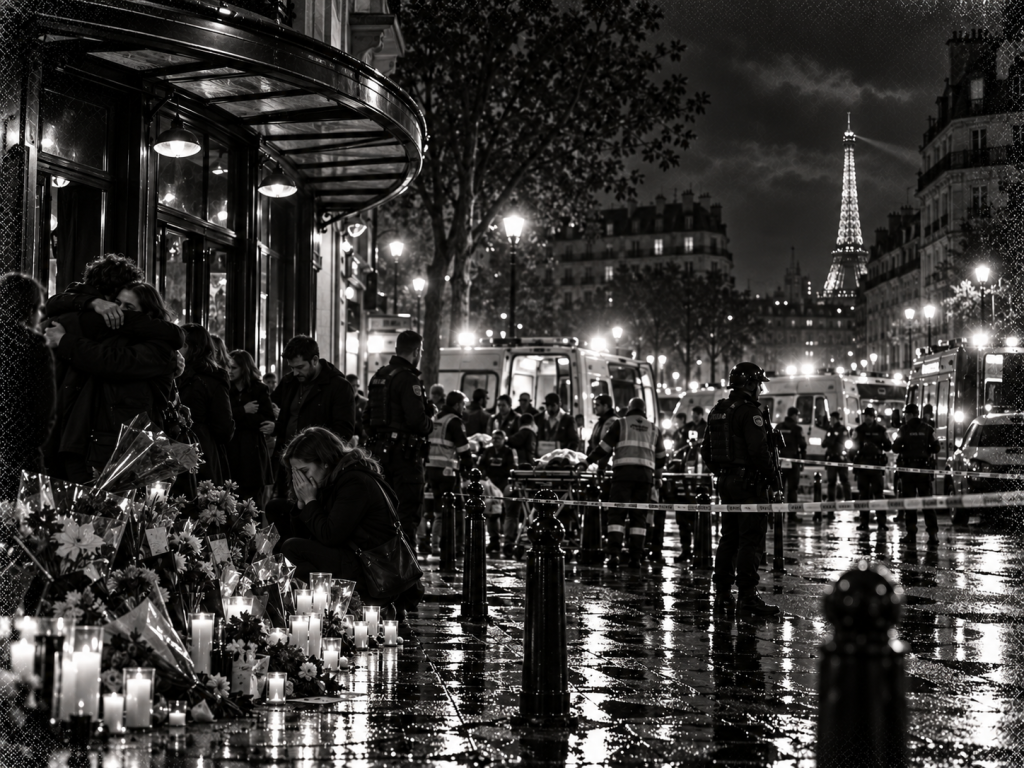
On Friday 13 November 2015, three teams of attackers carried out coordinated attacks in Paris and Saint-Denis. A football match was underway at the Stade de France, restaurant terraces were busy, and around 1,500 people were inside the Bataclan concert hall.
Explosions were heard near the stadium, gunmen opened fire at cafés and restaurants, and another team entered the Bataclan. For hours, neither the public nor emergency services could know how many attack sites there were, or whether more attacks were coming.
The French Interior Ministry records 130 people killed overall, 90 of them at the Bataclan.
Islamic State claimed responsibility. The investigation established the attack network's relationship with Islamic State structures.
On 29 June 2022 a Paris court convicted 20 men. They included Salah Abdeslam, the only surviving member of the attack teams, who was found guilty of murder in relation to a terrorist enterprise and sentenced to life without parole, the harshest sentence in French law.
Government Response
French authorities activated crisis mechanisms during the attacks. President François Hollande declared a state of emergency.
Major police operations, intelligence investigations, cross-border inquiries and significant legal and security changes followed.
A French parliamentary commission later investigated the state's means for combating terrorism and the lessons of the attacks.
Australia
Emma Parkinson, 19, from Hobart, was shot at the Bataclan and survived. She was the only Australian reported injured. Prime Minister Malcolm Turnbull spoke to her in hospital.
Summary
On 13 November 2015, coordinated attacks on the Stade de France area, cafés, restaurants and the Bataclan killed 130 people. Islamic State claimed them. In 2022 a Paris court convicted 20 men, including Salah Abdeslam.
France declared a state of emergency, security was expanded across public places, and vigils and memorials appeared. A debate followed over emergency powers, intelligence, borders, Syria, radicalisation and civil liberties.
You be the judge.