 7 OCT 2026
Faheem Lodhi — Sydney Electricity Grid Plot
7 OCT 2026 Willie Brigitte deported from Sydney
Willie Virgile Brigitte, a French convert to Islam from Guadeloupe, arrived in Australia on 16 May 2003 as an ordinary tourist. The Sydney Morning Herald reported that his name was not on the immigration department's alert list. The SMH also reported that French intelligence sent ASIO a cable on 22 September 2003 and a more urgent one on 3 October, which was not read until 7 October. He was arrested, questioned without success by ASIO, and deported to France in October 2003 for visa violations. ASIO director-general Dennis Richardson told Senate estimates: "Brigitte was almost certainly involved in activities with the intention of doing harm in Australia".
Link to Faheem Lodhi: when Brigitte was sentenced in Paris (reported by ABC News on 16 Mar 2007, Sydney time), ABC News reported that the prosecution said he came to Australia in May 2003 on the orders of Lashkar-e-Toiba. ABC News also reported: "He was to join a terror cell run by Faheem Khalid Lodhi, a Pakistani-born radical who was jailed for 20 years in 2006 for the alleged attack plot." The SMH reported in 2004 that Brigitte's "alleged accomplices, including Faheem Lodhi" would face Australian courts. Lashkar-e-Tayyiba was listed as a terrorist organisation in Australia on 5 November 2003.
A Paris court sentenced Brigitte to nine years in jail for "criminal conspiracy in relation with a terrorist enterprise". The BBC reported that prosecutors named the Lucas Heights nuclear research reactor in Sydney among the potential targets, along with the Pine Gap facility and military bases. Brigitte denied planning any attack in Australia. In Australia, Attorney-General Philip Ruddock said ASIO had used its questioning and detention powers on Brigitte's Australian associates.
More sources:
7 OCT 2026 Australia joins the invasion of Iraq
On 18 March 2003, after a phone call from President George W Bush, Prime Minister John Howard said Cabinet had authorised the Chief of the Defence Force, General Peter Cosgrove, to commit forces already in the Gulf to a US-led coalition operation. Howard said: "The government strongly believes that the decision it has taken is right, it is legal, it is directed towards the protection of the Australian national interest and I ask the Australian community to support it." The Sydney Morning Herald reported that a Newspoll at the time found only 25 per cent support for a war without UN backing.
The Department of Veterans' Affairs records that Australia joined the US-led "coalition of the willing" on 20 March 2003. Australians served under Operation Falconer, the offensive phase, from 18 March to 15 July 2003. The force included an Army Special Operations Task Group (SAS, commandos and incident response troops), RAN ships in the Persian Gulf, and RAAF aircraft. On 21 March, the SMH reported Howard's confirmation that F/A-18 Hornets, four naval vessels and the SAS had begun operations.
In Australia, the SMH reported that "Tens of thousands" of people marched in Melbourne on 14 February 2003. Rallies were planned in Sydney, Brisbane and Adelaide that weekend. Opposition Leader Simon Crean said Australia was involved in an unnecessary war: "And we are going to become a target as a consequence of it." DVA records that five Australians lost their lives as a result of service in the Iraq War, and that some 17,000 Australians have been issued the Iraq Medal.
More sources:
7 OCT 2026 JW Marriott Jakarta bombing
On 5 August 2003, a car bomb exploded at lunchtime outside the JW Marriott Hotel in Jakarta's embassy and business district. Early death tolls varied: the Indonesian Red Cross gave 14 (The Guardian, 5 Aug 2003), and Foreign Minister Alexander Downer gave 16 (SMH, 6 Aug 2003). The Guardian later reported, in 2004, that 12 people were killed. About 150 people were injured, most of the victims were Indonesian, and a Dutch banker, Hans Winkelmolen, was among the dead.
Indonesian police chief General Da'i Bachtiar said: "From the things we found at the crime scene, it looks very much like the bomb in Bali". Indonesian police asked the Australian Federal Police for help. Prime Minister John Howard said: "I am quite horrified at what appears to be a brutal terrorist attack". He authorised the AFP Commissioner to provide assistance, and the SMH reported that eight AFP crime scene investigators were sent.
Australian angle: Downer said at least one Australian was injured. That man needed 30 stitches and had been discharged from hospital, and another Australian in the hotel was traumatised. Howard said: "We Australians should understand this is very much an attack on Indonesia." Australia warned its citizens to stay away from central Jakarta.
More sources:
Introduction
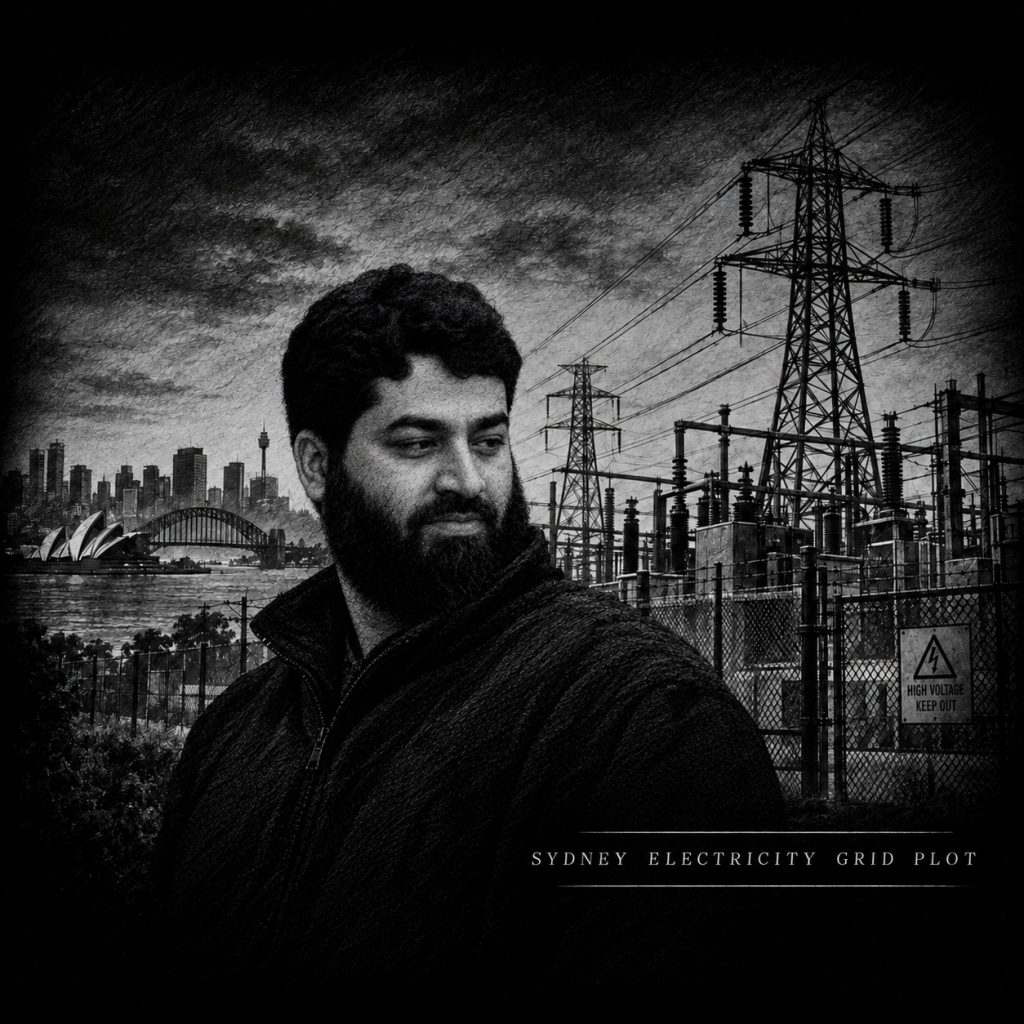
In early October 2003, a customer calling himself M Rasul, of a company called Rasul Electrical, ordered a desk map and a wall map of the Australian electricity supply system from a Sydney supplier. He gave a post office box, a phone number and a business name.
None of it was real. The man was actually Faheem Khalid Lodhi, a Pakistan-born Sydney architect and Australian citizen who was also known as Abu Hamza.
The Frenchman
Five months earlier, in May 2003, a French national named Willie Brigitte had landed in Sydney. The court in Lodhi's trial was told that Lodhi helped arrange his accommodation, that the two men had trained in Pakistan with Lashkar-e-Taiba (a group Australia has banned as a terrorist organisation), and that they kept in contact using mobile phones registered under false names.
In October 2003, Brigitte was deported to France for breaching his tourist visa. He was not charged in Australia. In 2007 a Paris court convicted him of criminal association in relation to a terrorist enterprise, and he was sentenced to nine years.
What police found
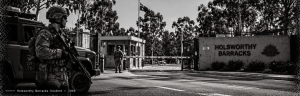
Lodhi was charged on 22 April 2004 and refused bail. The prosecution's case rested on four things: the electricity grid maps; his enquiries about the price and availability of chemicals capable of making explosives; a notebook, handwritten by Lodhi in Urdu, containing instructions for making poisons, explosives and incendiary devices; and aerial photographs of three Sydney defence sites, namely Victoria Barracks, HMAS Penguin and Holsworthy Barracks.
Lodhi pleaded not guilty. He told the court the chemicals were for a business venture and the maps were for a plan to market generators in Pakistan. "This country is my country and these people are my people," he said in his own defence.
Government Response
A law nobody had used
Lodhi was prosecuted under the terrorism offences Parliament added to the Commonwealth Criminal Code after September 11, which had never been tested at trial. Under those offences, the prosecution did not have to prove a time, place or method of attack, only that he had prepared for one.
The law changed during the case
Lodhi's lawyers attacked the indictment because it did not identify any specific terrorist act. While his case was before the courts, Parliament changed the law.
In November 2005, the Howard government passed the Anti-Terrorism Act (No 1) through Parliament in a matter of days, citing the threat uncovered by Operation Pendennis. The Act changed the wording of the preparation offences from "the" terrorist act to "a" terrorist act, which meant prosecutors would never again need to identify a specific attack. A further amendment made the change retrospective.
The NSW Court of Criminal Appeal refused to apply it to Lodhi, ruling that retrospective amendments could not reach into a trial that had already begun. It found the original indictment lacked particularity, and sent the matter back to be charged again. The prosecution redrew the charges and the case went ahead.
Secret evidence
Lodhi's was also one of the first trials run under the National Security Information Act 2004, which lets the Attorney-General restrict how national security material is disclosed in court. Lodhi challenged the Act as unconstitutional, and lost.
The verdict and the sentence
The trial began on 26 April 2006, two years after his arrest. The jury deliberated for almost five days. On 19 June 2006 it found him guilty on three counts: collecting the maps, seeking the chemical information, and possessing the notebook. It acquitted him on the fourth count, which concerned the aerial photographs of defence sites.
On 23 August 2006, Justice Anthony Whealy sentenced him to 20 years with a 15-year non-parole period, the heaviest terrorism sentence in Australia at the time. The judge also found the plan was at an early stage: no bomber had been chosen, and neither the precise target nor the method had been worked out.
The Court of Criminal Appeal upheld the conviction and sentence in December 2007. It noted his acts "did not give rise to any imminent, let alone actual, threat" of injury or damage, but held that early-stage preparation could still carry high culpability. The High Court refused him leave to appeal in June 2008.
Parole
Because Lodhi is a federal offender, his parole is decided not by a parole board but by the federal Attorney-General. His non-parole period expired in 2019. Attorney-General Christian Porter refused parole in 2019 and again in April 2020.
By then, Lodhi's lawyers told the Federal Court, he had admitted his guilt, disavowed his extremist ideology and been reclassified as a minimum-security prisoner. Justice Robert Bromwich dismissed his challenge, finding no legal unreasonableness in the Attorney-General's decision, while acknowledging Lodhi's side had made "compelling arguments in favour of a contrary conclusion."
Summary
Faheem Lodhi was the first person convicted of preparing a terrorist act under Australia's post-9/11 laws. He was found guilty over two maps, a notebook and a series of chemical enquiries, and cleared over the defence sites.
His case was the first test of those laws. While it was under way, Parliament changed them, citing Operation Pendennis, so that prosecutors no longer had to identify a specific attack.
Willie Brigitte, who the court was told had trained with him, was deported and not charged in Australia. Lodhi served his minimum term. The federal Attorney-General then refused him parole, in 2019 and again in 2020.
You be the judge.