 7 OCT 2026
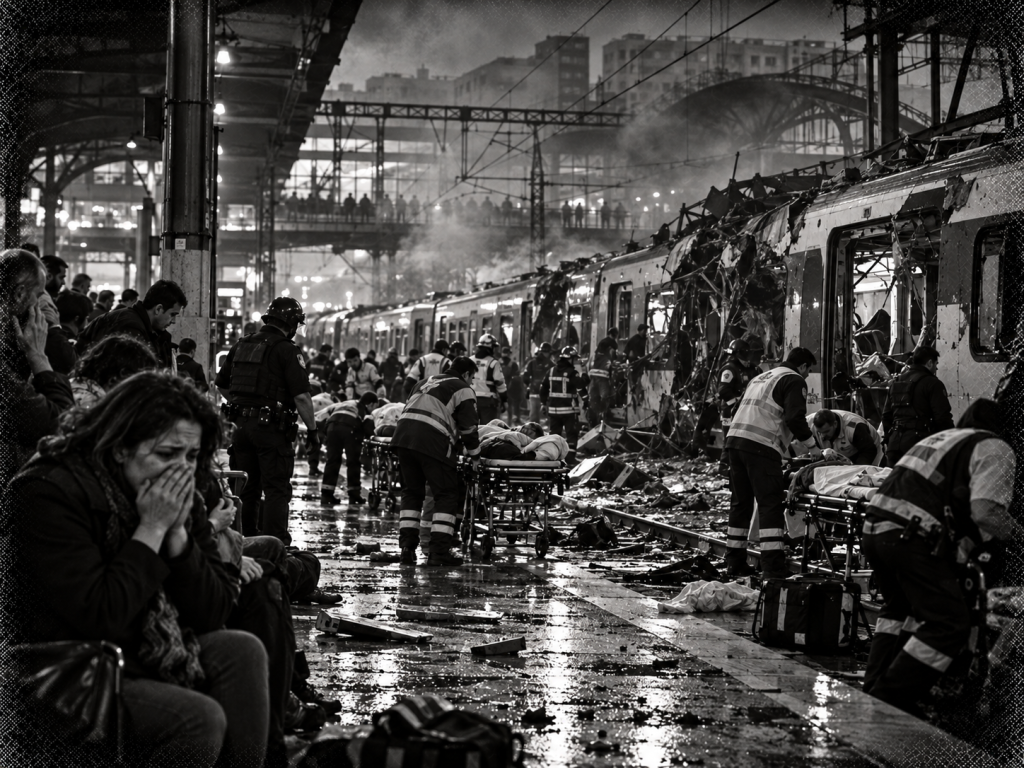
Mumbai Train Bombings
7 OCT 2026 Sheikh Hilali is suspended
In a Ramadan sermon in Sydney in September 2006, Sheikh Taj el-Din al-Hilaly, then regarded as the Mufti of Australia and based at Lakemba Mosque, compared women who do not dress modestly to uncovered meat. In late October 2006, excerpts from a recording appeared in The Australian. Reuters quoted the newspaper's translation: "If you take out uncovered meat and place it outside on the street, or in the garden or in the park, or in the backyard without a cover, and the cats come and eat it ... whose fault is it, the cats or the uncovered meat? The uncovered meat is the problem."
The board of the Lebanese Muslim Association, which owns Lakemba Mosque, met him on the night of 26 October 2006. On 27 October the ABC reported that he would not give sermons at Lakemba Mosque "for the next two to three months". Reuters reported that he had been "barred from preaching for three months". Association president Tom Zreika told the ABC the board accepted that the comments were misinterpreted. He would not say whether the sheikh agreed to stop preaching or whether the board imposed it as a punishment. Reuters quoted Zreika: "We felt the three months away would give him time to mull over what's been said."
Hilaly apologised and said his comments had been misinterpreted and taken out of context (Reuters). Prime Minister John Howard said the suspension was not enough (Reuters). In June 2007 the BBC reported that Hilaly had stepped down as mufti after declining another two-year term, and that Sheikh Fehmi Naji el-Imam had replaced him.
More sources:
7 OCT 2026 Danish cartoon riots – embassies burned
On 4 February 2006 crowds in Damascus attacked the building housing the Danish, Swedish and Chilean embassies, then the Norwegian embassy, in protest at the cartoons. The Norwegian mission was set on fire, and Denmark and Norway urged their citizens to leave Syria. On 5 February demonstrators in Beirut set fire to the building housing the Danish mission. The BBC reported that a nearby church and other property were also attacked, that at least 18 people were injured, and that Lebanon's Interior Minister, Hassan Sabeh, announced his resignation. SMH reported that up to five people were thought to have died in the violence.
Australian angle: on 4 February 2006 the Courier-Mail in Brisbane published one of the cartoons, and SMH reported it was the only Australian paper to do so. Abdul Jalal of the Islamic Council of Queensland said: "Queenslanders will not respond to that". The Australian Federation of Islamic Councils condemned the publication. Attorney-General Philip Ruddock said: "nothing justifies violence", adding that the media had a duty to act responsibly.
The government condemned the protests but did not condemn publication. It updated travel advice for Iran, Syria, Israel and Lebanon. It closed its office in Ramallah, which shared a building with the Danes, and took steps to secure Danish consulates in Australia. Foreign Minister Alexander Downer told Parliament: "We urge people to desist and remain calm" and "Freedom of speech is a cornerstone of a democratic society." Opposition Leader Kim Beazley said: "It's an offensive cartoon and it shouldn't be printed".
More sources:
7 OCT 2026 Transatlantic airliner liquid-bomb plot
On 10 August 2006 British police announced they had disrupted a plot to blow up airliners in mid-flight. The police operation was called Operation Overt. The BBC reported that MI5 secretly recorded two of the men making devices from drink bottles at a flat in Walthamstow, east London. The arrests led to tight limits on liquids in hand luggage, which the BBC said in 2009 were still in place.
On 7 September 2009 a Woolwich Crown Court jury convicted Abdulla Ahmed Ali, Tanvir Hussain and Assad Sarwar of conspiring to set off bombs disguised as drinks on transatlantic flights. The jury heard that Ali had identified seven flights from Heathrow to North America. On 14 September 2009 Mr Justice Henriques jailed all three for life, with minimum terms of 40 years for Ali, 36 for Sarwar and 32 for Hussain. He called it "the most grave and wicked conspiracy ever proven within this jurisdiction." Umar Islam, convicted of conspiracy to murder, received a minimum of 22 years.
Australian angle: on 10 August 2006 DFAT issued updated travel advice warning Australians in the United Kingdom to be careful. The Age reported that Melbourne Airport's four daily US flights adopted the new US rules: liquids removed from hand luggage and all shoes X-rayed. From 31 March 2007 Australia required liquids, aerosols and gels carried onto international flights to be in containers under 100ml in a clear plastic bag. The ABC reported that the change followed "last year's foiled plan".
More sources:
Introduction
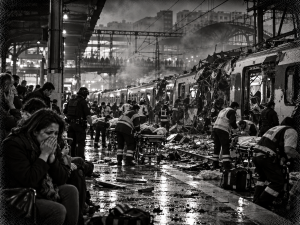
On the evening of 11 July 2006, during the rush hour, seven bombs exploded in first-class compartments of suburban trains on Mumbai's Western line. The first went off at 6.24pm and the last a few minutes later. The trains had left Churchgate, and the blasts were near Matunga Road, Mahim Junction, Bandra, Khar Road, Jogeshwari, Bhayandar and Borivali.
One hundred and eighty-seven people were killed, and about 824 were injured. Later Indian reports put the death toll at 189.
Maharashtra's Anti-Terrorism Squad took the case. It said the men it arrested were members of the banned Students' Islamic Movement of India, and that the conspiracy had been hatched with Lashkar-e-Taiba in Pakistan.
Government Response
The first verdict
Thirteen men were charged. One was acquitted by the trial court after nine years in custody. In 2015 a special court sitting under the Maharashtra Control of Organised Crime Act convicted the other twelve, sentencing five to death and seven to life. The State said the case was proved.
The second verdict
The twelve appealed, and one died in prison in 2021 while the appeal was pending. On 21 July 2025 a special bench of the Bombay High Court, Justices Anil S. Kilor and Shyam C. Chandak, set the 2015 judgment aside.
The bench said the prosecution had "utterly failed" to prove the case. "It is hard to believe that the accused committed the crime." All twelve convictions were quashed, and the men who were still alive left court after nineteen years.
Three days later, on 24 July 2025, the Supreme Court of India stayed the High Court judgment on the State's appeal, ruling that it was not to be treated as a precedent. It did not send the men back to prison. The appeal is still before the Supreme Court.
The High Court did not find who put the bombs on the trains. It found only that the State had not proved these twelve men had done it.
Summary
Seven bombs on seven trains in the Mumbai rush hour killed 187 people. A special court convicted twelve men and sentenced five to death. Nineteen years later, the High Court found the prosecution had utterly failed and released them. The attack itself is not in dispute. The State has appealed the High Court's decision to set aside the 2015 convictions, and the Supreme Court has stayed that judgment while it hears the case.
The High Court judgment of 21 July 2025 is a public document.
You be the judge.